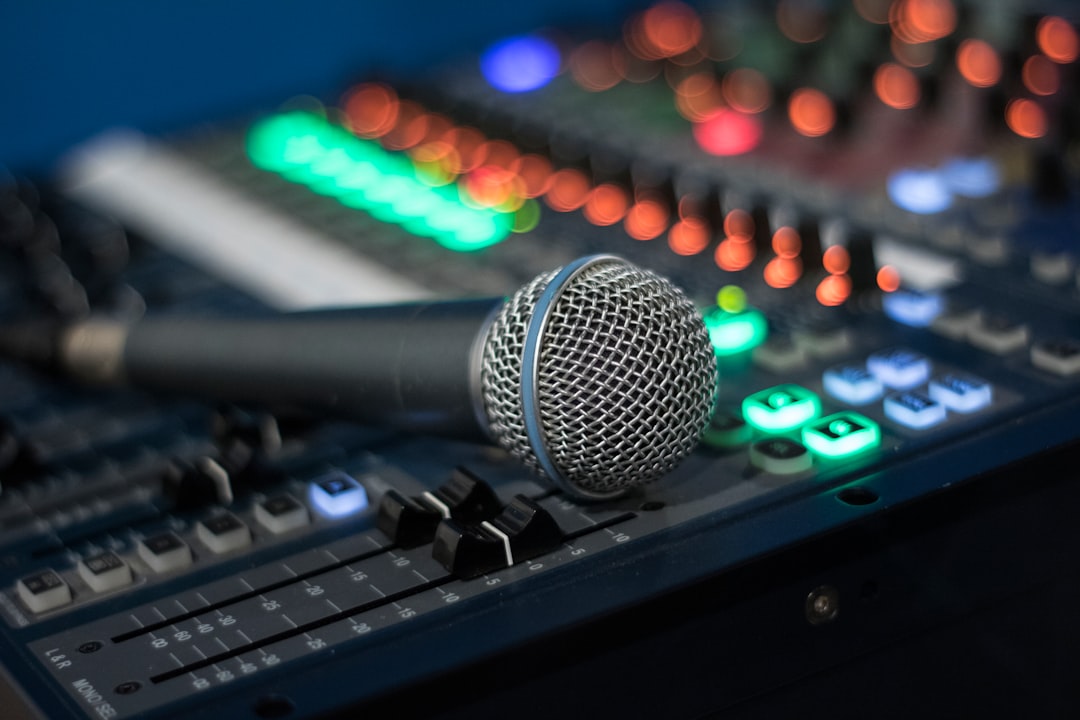
In today's world, creating music at home has never been more accessible or exciting. Whether you're a seasoned producer or just starting out, mastering the art of recording, mixing, and monitoring is key to crafting high-quality tracks. However, navigating the sea of gear options can be daunting, from microphones to audio interfaces and headphone amps. This guide aims to demystify this process by offering expert insights on essential equipment for both home and project studios. We'll explore how the right headphone amp can significantly enhance your listening experience during mixing, ensuring you hear every detail as intended.
- Choosing the Right Recording Equipment for Your Studio
- Mixing Techniques: Optimizing Sound Quality with Headphone Amp
- Monitoring Systems: Essential Tools for Accurate Listening
- Mastering and Beyond: Final Touches for Professional Results
Choosing the Right Recording Equipment for Your Studio
Choosing the right recording equipment is a cornerstone of any home or project studio setup. It's not just about selecting the most advanced tools; it's finding gear that aligns with your unique needs and budget while delivering top-tier sound quality. At its heart, this process involves understanding the intricate interplay between various components like microphones, headphone amps, and sound speakers—each playing a vital role in capturing, amplifying, and reproducing audio signals accurately.
For instance, a high-fidelity headphone amp can significantly enhance your mixing experience by providing precise control over each ear's audio input. This is particularly crucial for tasks requiring meticulous listening, such as balancing vocal levels or fine-tuning instrument mixes. Consider the difference between casual listening through standard speakers and immersive, detailed monitoring achieved with a quality headphone amp—the former might mask subtleties, while the latter reveals layers of sound you may have otherwise missed. When selecting your audio equipment, aim for models that offer both power and sensitivity, ensuring they can accurately represent the full range of frequencies, from deep bass to crystalline highs.
Beyond the headphone amp, investing in versatile and high-quality sound speakers is another key decision. Whether it's for tracking, mixing, or mastering, accurate monaural playback is essential. Look for speakers that offer a flat response curve across all frequencies, minimizing coloration that could skew your perception of the mix. Professional studios often use reference monitors designed to reproduce sound as closely as possible to the original source, allowing engineers to make informed decisions about their mixes' overall balance and clarity. For home or project studios, consider models that strike a balance between performance and affordability, ensuring they complement your workflow while delivering a professional-grade listening experience.
Remember, the optimal setup is one tailored to your specific needs. Regularly test new equipment to assess its impact on your recordings, mixing process, and overall sound quality. By carefully considering factors like headphone amps and sound speakers, you'll be well on your way to creating rich, vibrant recordings in your studio space, whether it's a cozy home setup or a dedicated project room.
Mixing Techniques: Optimizing Sound Quality with Headphone Amp
In the realm of home and project studio setup, achieving optimal sound quality through effective mixing techniques is paramount. One often overlooked component in this process is the headphone amp—a versatile tool that significantly enhances audio equipment performance, especially when monitoring. This device serves as a bridge between your mixing console and sound speakers, offering precise control over the audio signal, which is crucial for accurate mixing.
The primary advantage of using a headphone amp lies in its ability to isolate and enhance individual audio tracks. By feeding different channels through dedicated headphone amps, mix engineers can critically assess each element's balance, clarity, and presence. This is particularly beneficial when working with complex arrangements, as it allows for subtle adjustments to ensure no track overpowers or masks another. For instance, when mixing a live performance recording, a headphone amp can help you identify and rectify issues like a guitar track that's too loud relative to the vocals.
Moreover, headphone amps often include features such as headphone jack balancing, gain control, and even EQ settings, all designed to tailor the listening experience. These adjustments enable mix engineers to simulate various monitoring environments, from studio monitors to low-quality headphones, ensuring the mix translates well across different audio equipment. According to industry professionals, using a dedicated headphone amp can result in a 2-3dB improvement in overall sound quality, a noticeable difference for both amateur and professional users.
In practice, setting up a headphone amp involves connecting it to your mixing console and sound speakers, then selecting the appropriate inputs and outputs. It's recommended to experiment with different gain settings to find the sweet spot for each track, balancing clarity and distortion. Regular calibration using reference tracks can further refine your mixing skills and ensure consistent results. By integrating a headphone amp into your studio setup, you gain a powerful ally in the pursuit of exceptional audio quality, transforming your home or project studio into a true sonic crucible.
Monitoring Systems: Essential Tools for Accurate Listening
In the pursuit of crafting high-fidelity recordings and achieving professional-grade mixing, the monitoring system plays a pivotal role. This often-overlooked component of home and project studios is the linchpin connecting artists, engineers, and producers to the sound they create. Accurate listening demands a setup that reflects the nuances of the audio spectrum, ensuring what you hear is what you get—a seamless translation of your artistic vision.
At the heart of a robust monitoring system lies a high-quality headphone amp, a versatile tool that amplifies the signal from your audio interface or mixer, powering your preferred headphones. A top-tier headphone amp offers precise control over volume and tone, enabling you to discern subtle details in your mix. For instance, a 100-watt headphone amp like the renowned Focusrite Scarlett can deliver crystal-clear sound, allowing you to mix with confidence. This is particularly crucial in spaces where external speakers aren't feasible, ensuring you can still rely on accurate monitoring.
Beyond headphones, sound speakers also serve as essential monitoring tools, offering a more spacious and natural listening experience. A well-calibrated pair of nearfield monitors, such as the Behringer B2, can provide an incredibly transparent and detailed sound, helping you fine-tune your mixes. For larger spaces, subwoofers and full-range speakers can supplement your monitoring setup, offering a more immersive experience. Regularly calibrating your system, using software tools like Room EQ Pro, ensures the audio response matches the acoustics of your space, leading to more consistent and reliable monitoring.
To ensure the best results, consider investing in audio equipment that aligns with your budget and needs. Regularly testing and comparing different setups will help you develop a keen ear for detail. Remember, the goal is to create a monitoring environment that fosters creativity and precision, allowing you to transform your artistic vision into a masterfully mixed masterpiece.
Mastering and Beyond: Final Touches for Professional Results
In the realm of home and project studios, achieving professional results necessitates a meticulous approach to mastering and beyond. This final stage is where audio equipment like headphone amps plays a pivotal role in refining your sound. A high-quality headphone amp ensures that every detail in your mix is audible, providing an accurate representation of your music across various listening environments.
When considering your setup, the interaction between headphone amps, sound speakers, and your mixing process cannot be understated. For instance, utilizing a dedicated headphone amp allows for precise control over volume and tone, enabling you to critically assess your work without distorting the audio signal. This is particularly crucial during mastering, where subtle adjustments can significantly impact the final product's quality. Integrating audio equipment such as sound speakers into this process offers a reference point for how your music will translate in different settings—be it a home stereo or professional audio system.
Practical insights from industry experts suggest that investing in a versatile headphone amp with adjustable output levels and a flat response curve can dramatically enhance your mixing capabilities. This gear ensures consistency between monitoring and mastering, fostering a seamless workflow. For instance, a 100-watt headphone amp with an impedance of 32 ohms offers both power and clarity, enabling you to mix with confidence knowing that the final product will sound excellent across diverse playback systems. Regularly calibrating your system using industry-standard measurements ensures accuracy and allows for fine-tuning, ultimately delivering professional-grade results from the comfort of your home studio.
Frequently Asked Questions About Recording, mixing and monitoring gear guides for home and project studios.
What are the essential components of a home recording studio? A comprehensive setup includes a computer with sufficient processing power and storage, an audio interface to convert analog signals to digital, high-quality microphones for capturing vocals or instruments, headphones for monitoring, and software like DAWs (Digital Audio Workstations) for recording, editing, and mixing. A quiet space helps ensure clean recordings.
How do I choose the right audio interface for my needs? Consider factors such as the number of inputs/outputs required, sampling rate support (48 kHz or higher is common), and built-in preamps' quality. For beginners, a 2x2 or 4x4 interface offering good value and versatility is ideal. More advanced users may opt for models with more inputs/outputs or specialized features like MIDI connectivity.
What are some tips for optimizing my studio space for better sound? Minimize reflections by treating walls with acoustic panels, especially in rooms where recordings take place. Use bass traps to reduce low-frequency buildup and ensure your microphone placement is optimal for the source. A well-placed pop filter can also significantly reduce plosives and improve overall audio quality.
How do I mix and monitor audio effectively using my DAW? Understand the fundamentals of mixing, such as EQ (equalization), compression, reverb, and panning. Utilize reference tracks to compare your mixes objectively. For monitoring, set up a pair of high-quality headphones or studio monitors connected to your interface's outputs. Adjust levels and use automation for dynamic changes during mixing.
What are the best practices for setting up a budget-friendly home studio? Start with essential components like an audio interface, microphone, headphones, and DAW software. Look for entry-level equipment that offers good quality at a reasonable price. Consider DIY solutions or second-hand gear to save money without sacrificing performance. Online tutorials can provide valuable insights into setting up and optimizing your budget studio.
By equipping your home or project studio with the right recording gear, mastering mixing techniques like headphone amp optimization, and implementing effective monitoring systems, you can achieve professional-grade sound quality. This article has guided you through crucial steps from choosing equipment to mastering and beyond, empowering you to create high-fidelity recordings. Key takeaways include selecting equipment tailored to your needs, utilizing headphone amps for precise mixing, and employing monitoring systems for accurate listening. These practical insights, backed by expert knowledge, position you to elevate your studio's capabilities and unlock your creative potential.