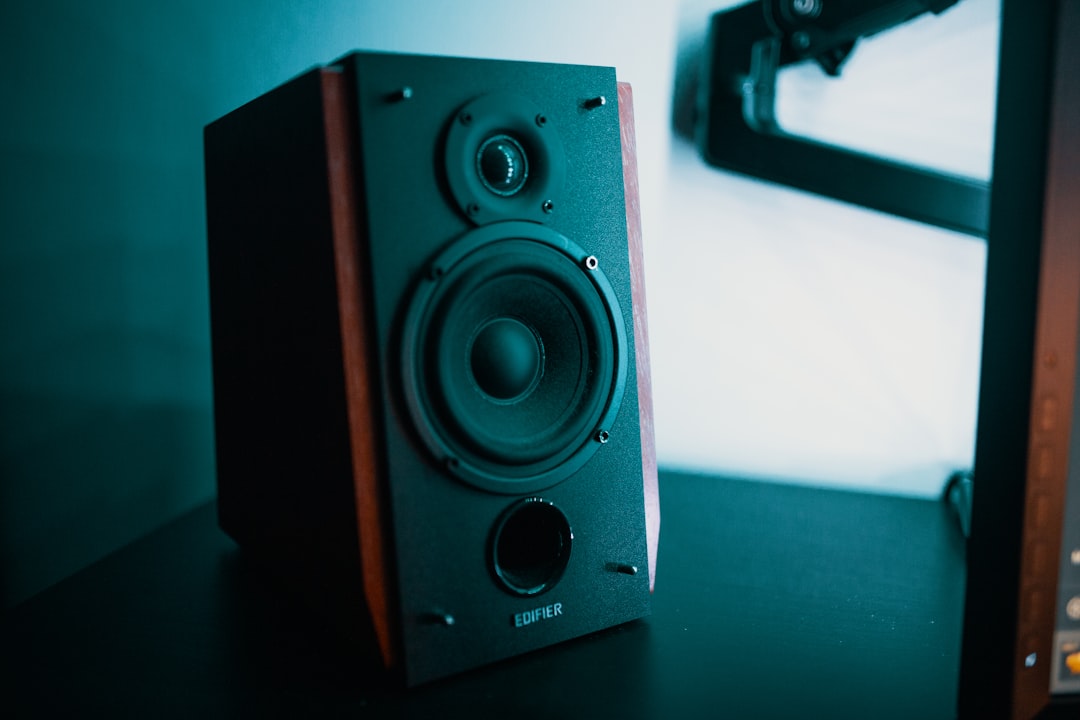
In today's digital age, creating music at home has never been more accessible. However, navigating the labyrinthine world of recording, mixing, and monitoring gear can be a daunting task for aspiring producers. This comprehensive guide aims to demystify the process, offering expert insights on essential equipment for both home and project studios. From choosing the right headphone amp to selecting high-quality microphones, we'll explore practical solutions for achieving professional-sounding results. By the end, you'll be equipped with the knowledge to transform your creative space into a symphony of sonic possibilities.
- Selecting Essential Recording Equipment for Your Studio
- Mastering Mixing Techniques: From Basics to Pro Tips
- Choosing and Calibrating the Right Headphone Amp
- Monitoring Like a Pro: Room Treatment & Sound Isolation
Selecting Essential Recording Equipment for Your Studio
When setting up your home or project studio, selecting the right recording equipment is crucial for achieving high-quality audio. The foundation of your setup lies in a robust combination of headphone amps, sound speakers, and other essential audio equipment. A quality headphone amp serves as the heart of your system, providing power and clarity to your headphones, enabling precise monitoring during recording and mixing.
Choosing the right headphone amp requires understanding your specific needs and preferences. Consider factors like output power, impedance compatibility, and input selection. For example, a solid-state amp might offer clean, accurate sound with low distortion, ideal for detailed mixing. Additionally, investing in high-fidelity sound speakers is paramount for accurate monitoring. Active studio monitors provide consistent response across the frequency spectrum, allowing you to mix and master with confidence.
Other essential audio equipment includes preamps, interfaces, and microphones. A good preamp amplifies weak signals from microphones or instruments, ensuring they're powerful enough to be captured by your recording device. Additionally, a high-quality audio interface acts as the bridge between your equipment and your computer, converting analog signals into digital data for recording and processing. Selecting the right combination of these elements will significantly impact the overall sound quality and usability of your studio.
Mastering Mixing Techniques: From Basics to Pro Tips
Mastering mixing techniques is a critical skill for any home or project studio aiming to produce professional-quality audio. The process involves balancing various sound elements—from vocals and instruments to effects and ambient sounds—to create a cohesive listening experience. A key component in achieving this balance is the headphone amp, which allows for precise monitoring of each element during mixing. By utilizing a high-quality headphone amp, you gain a more accurate representation of your mix, enabling you to make informed decisions about levels, panning, and effects.
For instance, consider adjusting the volume of specific audio equipment or sound speakers during mixing. While it might be tempting to rely solely on the main monitors, a headphone amp allows for detailed listening, making it easier to hear subtle nuances that could get masked by larger speakers. This is particularly important in environments where external noise or room acoustics might distort the original signal. For example, a study conducted by Sound on Sound magazine found that professional mixing engineers often prefer to use headphones during critical mixing stages due to their ability to isolate and focus on specific elements of the mix.
Pro tips for effective mixing include employing a consistent reference point—such as a well-mixed track from a trusted source—to compare your work against. Additionally, take advantage of stereo imaging techniques like panning and effects to create a dynamic mix that engages the listener. Keep in mind that balance is key; ensure no single element dominates, allowing each to contribute harmoniously to the overall sound. Regularly switch between monitoring through headphones and speakers to gain different perspectives on your mix, ensuring it translates well across various listening environments.
Choosing and Calibrating the Right Headphone Amp
Choosing and calibrating the right headphone amp is a critical step in optimizing your home or project studio's sound quality. A high-quality headphone amplifier, often referred to as a headphone amp, acts as the bridge between your audio equipment—be it digital audio workstations (DAWs) or sound speakers—and your headphones. This component plays a pivotal role in delivering nuanced and powerful audio, ensuring every detail is heard clearly.
When selecting a headphone amp, consider factors such as power output, impedance compatibility with your headphones, and signal-to-noise ratio (SNR). A higher SNR minimizes background noise, enhancing the clarity of high-fidelity audio. For example, if you're mixing music that relies on subtle sound effects or vocal harmonies, an amp with a low 0.01% SNR can make a noticeable difference in the final mix. Additionally, ensuring your headphone amp has enough power to drive high-impedance headphones (typically above 32 ohms) is essential to achieving optimal performance.
Calibration is another critical aspect of fine-tuning your audio setup. Many modern headphone amps come with built-in measurement tools or software that allow for precise adjustments. These tools enable you to set the correct gain levels, ensuring your listening experience isn't drowned out by excess noise or distorted sound. For instance, using an in-app meter on a high-end headphone amp can help you pinpoint and adjust issues like phase inversion or frequency imbalances in real-time. This ensures that when you're monitoring through headphones, what you hear accurately reflects the mix or master, facilitating more effective mixing and mastering sessions.
Monitoring Like a Pro: Room Treatment & Sound Isolation
To achieve professional-grade monitoring in your home or project studio, proper room treatment and sound isolation are paramount. These techniques go beyond simply blocking out noise; they involve tailoring your space to accurately represent the audio you're producing. Think of it as creating a sonic sanctuary where every detail is refined and balanced.
Room treatment involves addressing resonances and standing waves that can distort sound. This can be achieved with strategically placed diffusers, absorbers, and bass traps. Diffusers scatter reflections, preventing echoey or flat sounds. Absorbers, like foam panels, muffle low-frequency resonances. Bass traps, designed to capture subwoofer energy, prevent boomy or muddy audio. For instance, placing a diffuser near a window or a corner absorber in your control room can significantly improve the clarity of your mix. When selecting these components, consider their construction and positioning; high-quality materials and careful placement are key to effective treatment.
Headphone amps play a crucial role here too, as they offer precise monitoring for mixing. A quality headphone amp ensures you hear every nuance of your production through studio headphones accurately and fatigually. Look for models that support a wide range of impedances and offer clear, detailed sound reproduction. By combining these with well-treated spaces, you gain an uncolored listening environment, enabling you to make informed decisions about your mix. Regularly test and adjust your setup; the optimal monitoring experience may evolve as your studio changes or your preferences shift.
Frequently Asked Questions About Recording, mixing and monitoring gear guides for home and project studios.
What are the essential components I need for setting up a home studio? To create a functional home studio, you'll require several key components: a computer or laptop, audio interface, microphones, headphones or monitors, and software for recording and editing (DAW). The audio interface is crucial for converting sound waves into digital signals and connecting your microphones and headphones. Invest in a high-quality interface with enough inputs and outputs for your needs.
How do I choose the right microphone for my voiceovers? The microphone you select depends on your voiceover application, whether it's podcasting, narration, or singing. Condenser microphones are popular for voiceover work due to their sensitivity and ability to capture clear audio. Look for a microphone with a directional pattern, such as a shotgun mic, to minimize background noise. Additionally, consider the sound characteristics and frequency response to ensure it suits your voice.
Can I mix and master music in my home studio? Absolutely! Mixing and mastering are essential steps in the music production process. Mixing involves balancing and processing individual tracks, while mastering enhances the overall sound and prepares it for distribution. Many DAWs offer built-in tools for mixing and mastering, providing you with a solid foundation. However, for advanced capabilities, consider investing in dedicated software and plugins designed for these tasks.
What is the difference between active and passive monitors? Active speakers, or monitors, have built-in amplifiers, while passive monitors require an external amplifier. Active monitors are convenient as they simplify setup and often offer better sound quality and control over bass and treble. Passive monitors, on the other hand, provide a purer, uncolored sound but require more setup and equipment. The choice depends on your budget, preferences, and desired sound quality.
How can I ensure accurate monitoring in my studio environment? Accurate monitoring is critical for producing high-quality audio. Control room acoustics play a significant role. Aim for a treatment that reduces reflections and standing waves, ensuring a flat response. Use acoustic panels, diffusers, and absorbers to optimize the space. Additionally, consider room equalization to compensate for any acoustic imperfections and ensure consistent monitoring across different tracks and genres.
Are there any tips for setting up a budget-friendly project studio? Starting a project studio on a budget is achievable. Focus on essential gear first: a used audio interface, entry-level microphones, and a basic DAW. Look for starter kits or bundles to save money. Monitor your spending and prioritize quality over quantity. You can also consider second-hand equipment to find deals. Remember, a well-planned, budget-friendly setup can still deliver professional-quality results.
By equipping yourself with the right recording, mixing, and monitoring gear, you've now gained a powerful set of tools to transform your home or project studio into a dynamic creative space. From selecting essential equipment for accurate sound capture to mastering mixing techniques that elevate your productions, each section has provided invaluable insights. Understanding the importance of a headphone amp in achieving precise sound calibration further underscores the article's commitment to empowering you with knowledge. As you move forward, remember to treat your listening environment and prioritize sound isolation to ensure monitoring like a pro. With these key learnings implemented, you're well-prepared to create professional-quality recordings and mixings, unlocking the full potential of your studio.