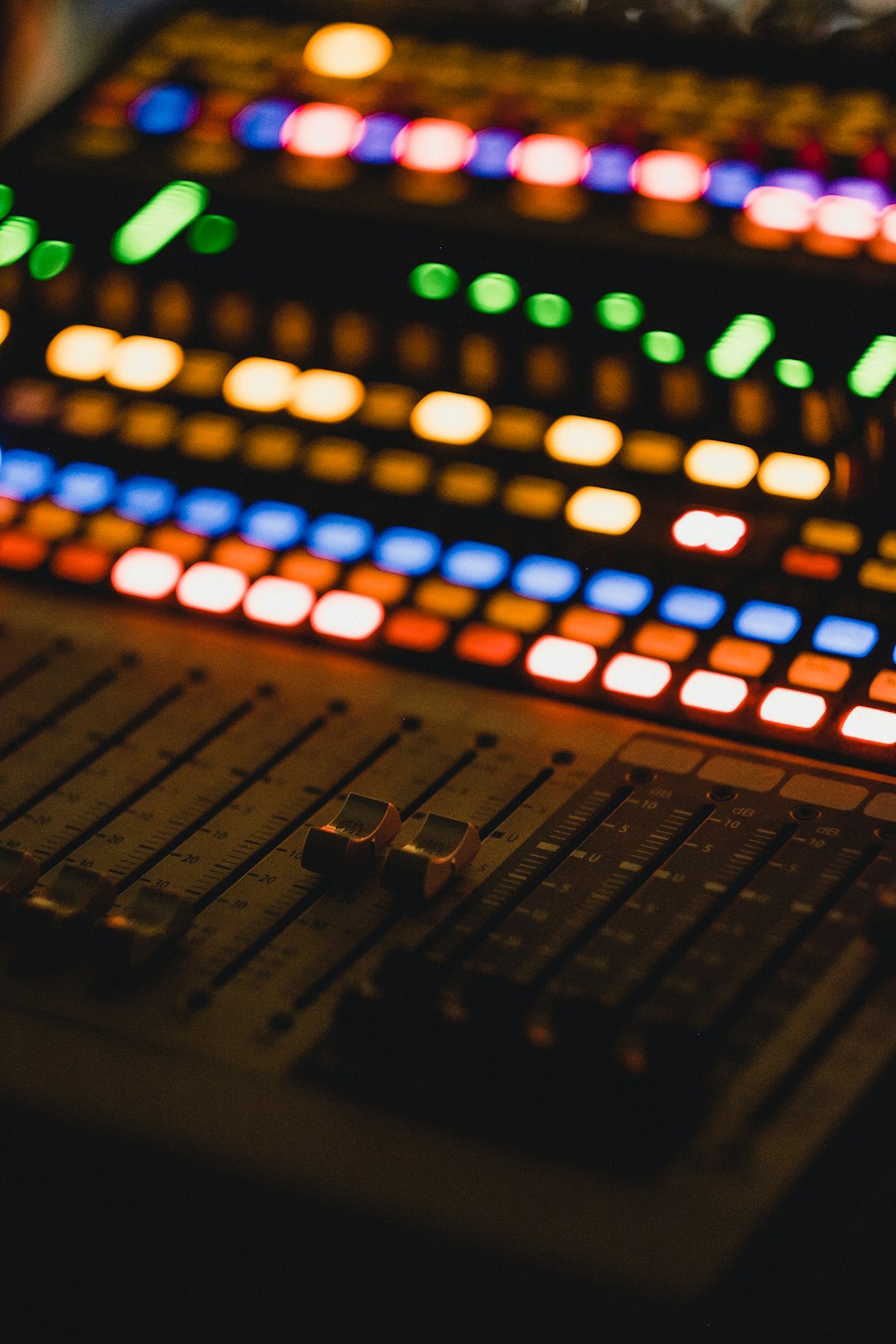
In today's digital age, the art of music creation has democratized, empowering artists to bring their visions to life from the comfort of their homes. However, navigating the labyrinthine world of recording, mixing, and monitoring gear can be a daunting task for aspiring producers. This comprehensive guide aims to demystify this process, offering expert insights on essential equipment for both home and project studios. From studio monitors that naturally enhance your listening experience to versatile mixing consoles and cutting-edge audio plugins, we'll equip you with the knowledge to make informed decisions, ensuring your creative vision is realized with precision and clarity.
- Choosing the Right Recording Equipment for Your Studio
- Mixing 101: Techniques and Tools for Optimal Sound
- The Role of Studio Monitors in Critical Listening
- Monitoring and Quality Assurance for Professional Results
Choosing the Right Recording Equipment for Your Studio
Choosing the right recording equipment is a cornerstone of setting up a successful home or project studio. At the heart of this choice lies the selection of studio monitors, which serve as the direct link between your audio source and your perception of the sound. High-quality studio monitors not only reproduce audio accurately but also help you make informed mixing decisions based on what you hear. When shopping for studio monitors, consider factors such as frequency response, sound pressure level (SPL), and driver technology. For example, a monitor with a wide frequency response ensures that you hear all the nuances of your mix, from deep bass to crisp highs.
Complementing studio monitors are versatile sound speakers or audio equipment, which can include active or passive speakers, microphones, and audio interfaces. Active speakers, for instance, boast built-in amplifiers that simplify setup and ensure clean, powerful sound. Conversely, passive speakers require external amplifiers but offer purer sound and the opportunity to fine-tune your system. Microphones, the first point of audio capture, are equally crucial. Different types of microphones, such as dynamic, condenser, or ribbon mics, excel in various recording scenarios, from singing to capturing ambient sound. An audio interface acts as the bridge between your microphones, instruments, and computer, enabling you to record and process audio with precision.
The ideal setup also considers the size and acoustics of your space. Small, compact monitors might suffice for a modest home studio, but larger spaces demand more powerful speakers to fill the room with clear, balanced sound. Similarly, treating your studio's acoustics with materials like acoustic panels can significantly enhance the overall sound quality by reducing reflections and reverberation. Investing in high-quality studio monitors and complementary audio equipment not only improves your recording capabilities but also fosters creativity, enabling you to produce music, podcasts, or audio projects of the highest caliber.
Mixing 101: Techniques and Tools for Optimal Sound
Mixing is an art that transforms raw audio tracks into a cohesive, balanced, and powerful soundscape. In any studio, whether home-based or professional, the quality of the mix significantly influences the final product. Studio monitors, specifically designed to reproduce sound accurately, play a pivotal role in this process. They allow mix engineers to critically listen, ensuring the audio is well-representative of the artist's vision. When selecting studio monitors, consider factors like frequency response, sensitivity, and driver type, as these directly impact the clarity and fidelity of your mix.
A foundational technique in mixing is equalization (EQ). This involves adjusting frequency bands to enhance or reduce specific sounds. For instance, cutting low frequencies (sub-bass) can eliminate unwanted rumble, while boosting high-mids can add clarity to vocals. Many modern mixing boards and digital audio workstations (DAWs) offer intuitive EQ tools, allowing for precise adjustments. Additionally, audio equipment like graphic equalizers and parametric EQ plugins provide granular control, enabling you to sculpt the sound to your exacting standards.
Another essential mixing practice is panning, which places audio signals across the stereo field. This technique creates a wide, immersive soundstage, enhancing the overall listening experience. Pan different instruments and effects to create depth and movement. For example, positioning drums and percussion slightly to the left and right adds dynamism, while panning vocals center can create a powerful, focused effect. Advanced mixing techniques include automation, where you automatically adjust parameters over time, and sidechain compression, which triggers effects based on specific audio events. These tools, combined with high-quality studio monitors and sound speakers, empower you to achieve a professional-grade mix.
The Role of Studio Monitors in Critical Listening
Studio monitors play a pivotal role in any home or project studio, serving as the linchpin for critical listening sessions. These specialized sound speakers are engineered to deliver an accurate, neutral reproduction of sound, allowing producers and engineers to make informed decisions about their mix. When selecting studio monitors, it's crucial to consider factors like frequency response, sensitivity, and power handling—all vital to ensuring a trustworthy and detailed representation of your audio content.
For instance, a set of high-quality studio monitors with a wide frequency range (typically 50Hz–20kHz) can expose subtle nuances in your mix, from the lowest bass notes to the highest treble frequencies. High sensitivity levels (90dB or more) mean that even small volume levels will provide clear and accurate sound, facilitating precise monitoring during long mixing sessions. Power handling capabilities should also be assessed to ensure they can reproduce dynamic range without distortion, a critical aspect of achieving a professional-sounding mix.
In practice, many professionals prefer active studio monitors, which include built-in amplifiers, simplifying setup and ensuring consistent performance across different listening positions. Brands like Yamaha, KRK, and Studio Monitoring Systems offer reliable options catering to various budgets and mixing needs. Positioning is another key consideration; placing monitors at ear level and angling them slightly downward toward the listener's position enhances accuracy and reduces reflections, providing an objective listening environment. By utilizing studio monitors effectively, you gain a deeper understanding of your audio material, enabling more confident and artistic decisions in the mix.
Monitoring and Quality Assurance for Professional Results
Achieving professional results in a home or project studio requires a critical eye for detail, and that starts with meticulous monitoring and quality assurance practices. Studio monitors, specifically designed to reproduce sound accurately, serve as your most invaluable tools in this process. They provide an objective perspective, allowing you to listen critically and make informed decisions about your mix. The right pair of studio monitors can reveal subtle nuances, balance, and clarity in your audio, ensuring your final product sounds its best.
When selecting studio monitors, consider factors like frequency response, sound pressure level (SPL), and driver type. A wide frequency response ensures your audio translates accurately across all ranges, from deep bass to high treble. Higher SPL capabilities allow for more dynamic performances without distorting, while high-quality drivers deliver precise sound reproduction. For example, a set of active studio monitors with a flat response curve and powerful drivers can provide an unbiased listening environment, enabling you to fine-tune your mix with confidence.
In a professional setting, proper monitoring involves using multiple speakers placed at optimal positions in the room. This setup, known as a multi-monitor system, allows for a 360-degree listening experience. Positioning your studio monitors at ear level and slightly in front of you creates a natural listening position, minimizing reflections and creating an accurate soundstage. Additionally, utilizing room acoustic treatments, like diffusers and absorbers, can improve the overall sound quality by controlling reflections and standing waves, ensuring your audio is as clean and precise as possible. Regularly calibrating your monitors and audio equipment using industry-standard measurement tools is also essential to maintain consistency and accuracy in your mixes.
Frequently Asked Questions About Recording, mixing and monitoring gear guides for home and project studios.
What are the essential components for setting up a home studio?
A home studio setup requires a combination of hardware and software. Essential components include a computer (ideally with robust processing power and a dedicated audio interface), a quality microphone for voice or instrument recording, headphones or studio monitors for accurate listening, and a digital audio workstation (DAW) software like Ableton Live, Logic Pro, or Pro Tools. Don't forget a comfortable chair and a quiet space to minimize background noise.
How do I choose the right audio interface for my needs?
An audio interface converts analog signals (from microphones, instruments) to digital audio for your computer. Consider factors like the number of inputs/outputs, sample rate, and bit depth. For beginners, a 2-4 channel interface with a decent quality pre-amp and a minimum of 48 kHz sample rate is sufficient. As your studio needs grow, you can upgrade to more advanced interfaces.
What are the differences between studio monitors and headphones?
Studio monitors are designed to reproduce sound accurately, providing a flat response across a wide frequency range. They are essential for mixing and mastering as they allow you to hear your work objectively. Headphones, on the other hand, offer a more personal listening experience, ideal for tracking and listening to music in a quiet environment.
Can I mix and master music using only free software?
Yes, there are excellent free digital audio workstations available, such as Audacity and LMMS, which offer a range of mixing and mastering tools. However, professional-grade results often require paid software with more advanced features and better audio quality.
How do I ensure my recordings sound clear and free of noise?
Minimizing background noise is crucial. Use soundproof materials to treat your studio space, invest in high-quality cables and connectors, and position microphones close to the source. Additionally, proper placement of absorbent panels in your studio can significantly reduce reflections and reverberation, enhancing the clarity of your recordings.
Are there any tips for monitoring audio accurately?
Accurate monitoring depends on using well-calibrated speakers or headphones and setting up a reference mix. Compare your mix to a professionally produced track to ensure consistency. Regularly calibrate your monitoring system and consider using reference tracks from reputable sources to ensure your mix translates well across different systems and devices.
By equipping yourself with the right recording equipment, mastering mixing techniques, and understanding the crucial role of studio monitors, you've now gained a solid foundation for creating professional-quality sound in both home and project studios. The key insights from this guide emphasize the importance of informed choices at each step—from selecting gear that aligns with your needs to utilizing studio monitors for critical listening. These practical applications empower you to refine your audio projects, ensuring they meet the highest standards. Moving forward, consider delving deeper into specific equipment comparisons and exploring advanced mixing techniques to continue enhancing your studio capabilities.