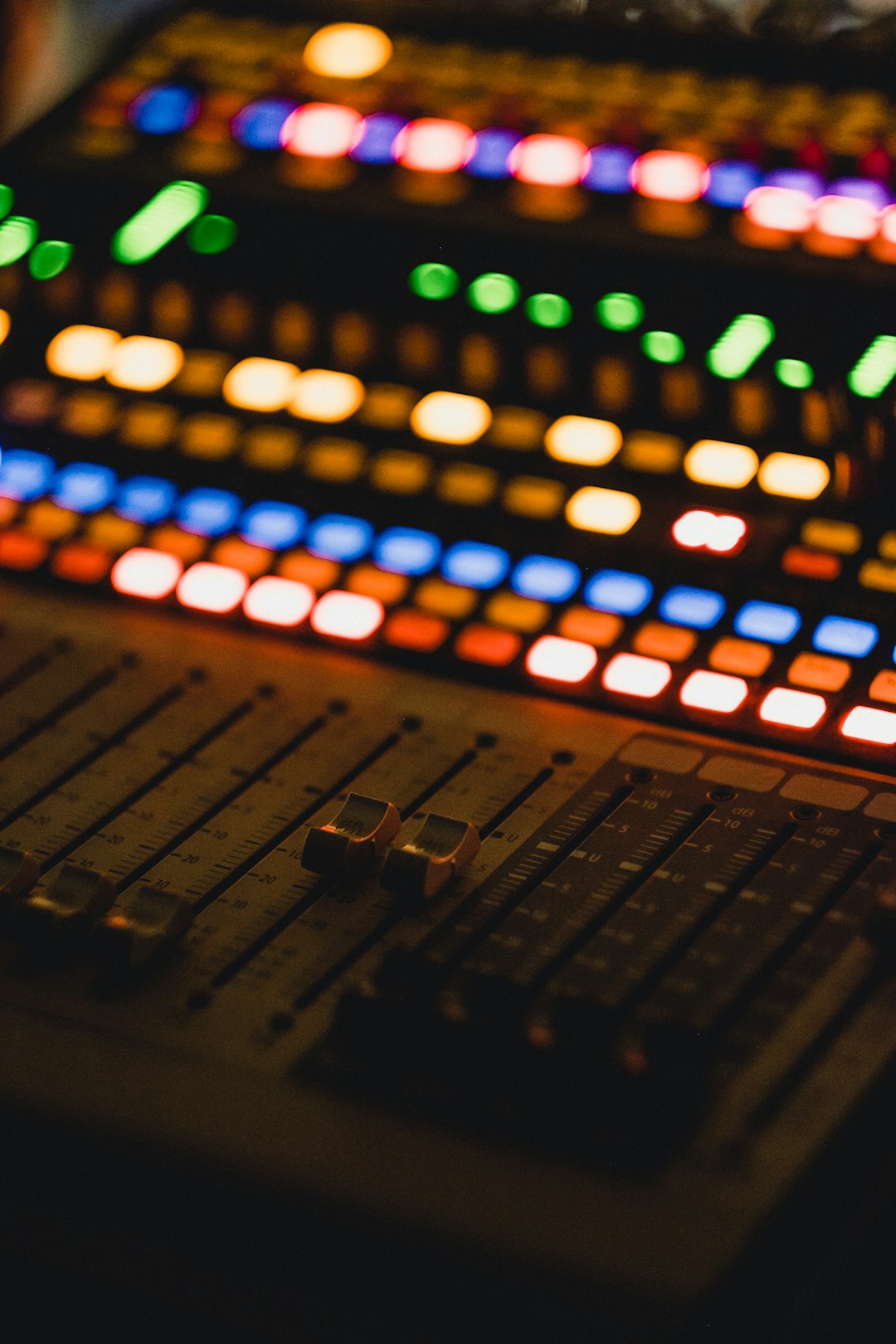
In today's digital music landscape, establishing a high-quality home or project studio has become more accessible than ever. However, navigating the complexities of recording, mixing, and monitoring can be daunting for aspiring producers and musicians. This comprehensive guide aims to demystify these processes, empowering creators with practical insights on gear selection, setup optimization, and acoustic treatment naturally to achieve professional results. By the end, you'll possess the knowledge to transform your space into a creative haven where art meets science.
- Choosing the Right Recording Equipment for Your Studio
- Acoustic Treatment: Enhancing Sound Quality Naturally
- Mixing Mastery: Techniques for Balanced Audio Production
- Monitoring Systems: Critically Evaluating Your Mixes at Home
Choosing the Right Recording Equipment for Your Studio
Choosing the right recording equipment is a cornerstone of any home or project studio setup, profoundly impacting both the quality and vibe of your recordings. It's not just about selecting the latest tech; it involves understanding your unique space, musical needs, and artistic vision. Acoustic treatment naturally plays a pivotal role here, as it helps to control reflections, reverberation, and standing waves—all crucial elements for achieving a professional sound. Consider an environment with hard surfaces like concrete or tile reflecting sound waves, creating artificial echoes; proper acoustic treatment can transform this into a space that enhances your audio without unwanted artifacts.
The heart of your setup includes high-quality sound speakers, selected based on their ability to reproduce a wide range of frequencies accurately. Active studio monitors are popular for their consistent performance and built-in amplification, while passive options offer purer sound but require external amplification. Audio equipment like microphones, interfaces, and preamps are also essential; each plays a critical role in capturing your performances or sounds with clarity and detail. For instance, dynamic microphones excel at handling high sound pressure levels, making them ideal for drums or vocals, whereas condensers offer exceptional sensitivity and precision for detailed recording of acoustic instruments.
When equipping your studio, balance is key. Invest in foundational pieces like acoustic treatment and quality speakers to create a solid sonic foundation. Then, layer in specialized equipment based on your specific needs. Remember, the best setup for you is one that allows you to focus on the art without constant technical hurdles. Regularly evaluating your setup and making adjustments as your studio evolves ensures you stay at the top of your game.
Acoustic Treatment: Enhancing Sound Quality Naturally
Creating a professional-sounding recording in your home or project studio doesn't always require the most advanced audio equipment. One of the most effective ways to enhance sound quality naturally is through acoustic treatment. Think of it as nurturing your space to produce the best possible audio.
Sound travels in waves, and the way these waves interact with your studio's environment significantly impacts the final recording. Acoustic treatment naturally involves strategically placing materials to absorb, reflect, or diffuse these sound waves. For example, sound-absorbing panels made from foam or fiberglass can mitigate reverberation and echo, creating a clearer, more controlled recording environment. Diffuser panels, on the other hand, scatter sound waves, preventing early reflections that can muddy the mix.
Consider the placement of your sound speakers as part of your acoustic treatment strategy. Speakers should be positioned at ear level to avoid colorations that can affect the perception of frequency response. Room acoustics can be particularly problematic, with corners acting as sound traps or creating standing waves. Using acoustic treatments like bass traps in these areas can significantly reduce low-frequency buildup, resulting in a flatter, more balanced frequency response. Regularly measuring your room's acoustics with tools like an FFT analyzer can provide data-driven insights to guide your acoustic treatment decisions.
Ultimately, effective acoustic treatment naturally is an art and a science. It requires an understanding of sound behavior and a keen ear for detail. Start with basic treatments like placing bookshelves against walls or using heavy curtains to reduce reflections. As you gain experience, you can explore more advanced techniques, such as custom-built absorbers or diffusers. Remember, the goal is to create a space that not only sounds great but also inspires creativity, allowing your audio equipment to reach its full potential.
Mixing Mastery: Techniques for Balanced Audio Production
Mastering the art of mixing is a crucial step in creating balanced and professional-sounding audio productions, whether for music or voiceover projects. In your home or project studio, achieving this requires an understanding of acoustic treatment and utilizing the right audio equipment to fine-tune your mixes. The key lies in balancing frequencies, ensuring each element has its own space in the frequency spectrum, and creating a cohesive listening experience.
One effective technique is to employ room acoustic treatment naturally to mitigate reflections and standing waves. This can be as simple as adding bass traps in corners or strategically placing diffusers on walls to reduce harsh echoes. By managing early reflections, you gain control over the overall soundstage and prevent certain frequencies from dominating the mix. For instance, diffusers can help narrow down the width of a stereo image, allowing for more precise panning and a better sense of depth. Additionally, monitoring through high-quality sound speakers is essential; they should provide an accurate representation of your mix across different listening environments.
When mixing, use reference tracks to ensure your audio equipment and room acoustic treatment are working in harmony. Compare your mix against these references to make adjustments as needed. This process involves balancing levels, panning, EQ, and dynamics processing. A well-balanced mix will have a clear middle range for vocals and instruments, with low frequencies controlled and high frequencies present but not piercing. Regularly check your mixes on different systems and in various rooms to guarantee universality and avoid sonic colorations specific to a single setup.
Monitoring Systems: Critically Evaluating Your Mixes at Home
Evaluating your mixes at home with critical monitoring systems is a key step in achieving professional-quality sound, especially in smaller project studios or home setups. The right audio equipment, including high-quality sound speakers, can significantly enhance this process. One of the primary considerations is acoustic treatment; naturally, optimizing your space for accurate sound reflection and absorption can transform your mixes. Think of it as fine-tuning your studio's acoustics to match your listening environment, ensuring that what you hear on your monitors is true to the original source.
Consider an array of monitor speakers strategically placed in your room—this could be a pair of near-field monitors or even larger main speakers, depending on your space and budget. High-fidelity sound speakers designed for critical listening should reproduce sound accurately across all frequencies, from deep bass to crisp highs. This is crucial for making informed mixing decisions. For instance, a study by the Audio Engineering Society found that professionals consistently preferred rooms with optimized acoustic treatment for critical listening tasks.
Regularly checking your mixes against references on high-quality audio equipment can help you develop an ear for subtleties. Compare your work to professionally mixed tracks using the same monitor speakers and reference materials. Over time, this practice will empower you to make more confident adjustments. Remember, a well-treated room and suitable audio equipment form the backbone of a successful mixing environment.
Frequently Asked Questions About Recording, mixing and monitoring gear guides for home and project studios.
What are the essential components I need to set up a home studio? To establish a functional home studio, you'll require a computer or laptop, audio interface, microphones, headphones or monitors, and a digital audio workstation (DAW). The audio interface connects your computer to microphones and speakers, enabling audio input and output. Microphones capture sound, while headphones or studio monitors allow for accurate listening and mixing. A DAW is software that lets you record, edit, and mix audio. Popular options include Ableton Live, FL Studio, and Logic Pro.
How do I choose the right audio interface for my needs? Consider your budget, desired input/output capabilities, and intended use. For basic recording, a 2-4 channel interface suffices. High-end interfaces offer more inputs/outputs, better conversion quality, and advanced features like built-in effects. If you plan to record multiple instruments or vocals simultaneously, opt for an interface with sufficient preamps and input channels.
What are the best headphones for home studio use? Studio headphones prioritize sound quality, comfort, and isolation. Closed-back headphones block external noise, while open-back models offer a more natural listening experience. Look for headphones with a wide frequency response, low distortion, and adjustable headbands. Popular choices include Sennheiser HD 580s, AKG K701s, and Audio-Technica ATH-M50x.
Can I mix music in my home studio without professional equipment? While professional studios have advanced gear, you can achieve impressive mixes at home with the right software and careful listening. High-quality microphones, headphones, and a good DAW are essential. Focus on understanding mixing fundamentals: level balancing, panning, EQ, compression, and reverb. Online tutorials and practice will help you develop your skills.
What's the difference between monitoring speakers and studio monitors? Monitoring speakers are general-purpose loudspeakers designed for casual listening. They may not provide accurate sound representation or isolate you from room acoustics. Studio monitors, in contrast, are specifically engineered for critical listening and mixing. They offer flat frequency response, low distortion, and precise imaging, enabling you to make informed decisions about your mix.
By equipping yourself with the right recording gear, implementing effective acoustic treatment naturally, mastering mixing techniques, and selecting suitable monitoring systems, you can transform your home or project studio into a dynamic, professional space. This article has guided you through each critical step, from choosing equipment to evaluating mixes, empowering you to create high-quality audio. Now, with a comprehensive understanding of these key aspects, you're ready to elevate your sound, foster creativity, and produce outstanding recordings. Take these insights and apply them to your studio setup, and watch your audio projects flourish.