In today's digital age, the art of music creation has democratized, empowering individuals to establish their own home or project studios. However, navigating the vast landscape of recording, mixing, and monitoring gear can be a daunting task for beginners and seasoned producers alike. This comprehensive guide aims to demystify this process by offering expert insights into selecting and configuring studio monitors that not only accurately represent your mix but also enhance your creative workflow. By the end, you'll possess the knowledge to make informed decisions, ensuring your studio is equipped to bring your musical visions to life.
- Choosing the Right Recording Equipment for Your Studio
- Mixing Basics: Techniques to Enhance Audio Quality
- Selecting Studio Monitors for Accurate Listening
- Monitoring and Critical Ear Training for Music Producers
Choosing the Right Recording Equipment for Your Studio
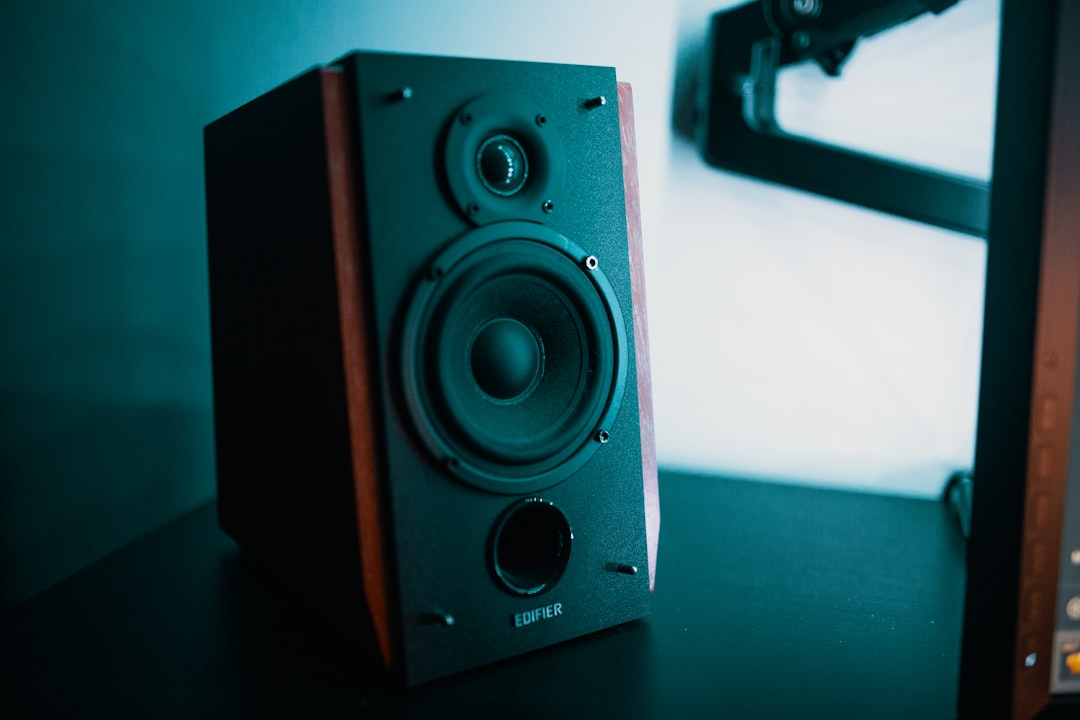
When setting up a home or project studio, selecting the appropriate recording equipment is paramount to achieving high-quality results. The foundation of your setup lies in choosing the right audio equipment, particularly studio monitors, which play a crucial role in both the recording and mixing processes. These speakers are designed to deliver an accurate and natural sound reproduction, ensuring that what you hear during tracking matches the final mixed output.
A common misconception is that powerful, expensive speakers are always the best choice. However, expert producers often emphasize the importance of finding monitors that fit your specific needs and budget rather than merely relying on brand or price tags. For instance, a well-calibrated pair of entry-level studio monitors can offer surprisingly accurate sound for vocals and instruments when properly set up and treated within your space. This approach not only saves resources but also encourages a more thoughtful selection process, considering factors like frequency response, sensitivity, and coverage angle.
When making your selection, consider the size and acoustics of your room. Smaller rooms may require monitors with tighter control over directivity to prevent reflections from creating standing waves, while larger spaces might benefit from more powerful speakers capable of covering a wider area. Additionally, investing in high-quality cables and connections is essential for minimizing signal loss and ensuring clean audio transmission between components. By carefully considering these aspects, you'll be well on your way to establishing a robust studio setup with studio monitors that deliver exceptional performance for years to come.
Mixing Basics: Techniques to Enhance Audio Quality
Mixing is a crucial step in the recording process that involves balancing and enhancing the various elements of your audio track. For home and project studios, getting this right can significantly improve the overall sound quality. A key component in achieving this is the choice and placement of studio monitors. These are specifically designed sound speakers tailored to provide an accurate representation of the recorded audio. Opting for high-quality studio monitors that are suited to your space and budget can make a noticeable difference.
One fundamental technique is to ensure proper level balancing. Each instrument and vocal track should be mixed to a similar relative level, preventing any one element from overpowering the mix. This can be achieved by using a digital audio workstation (DAW) to adjust individual faders. Additionally, panning can be employed to create a sense of space and depth, placing different elements across the stereo field. For example, drums and percussion can be panned to the sides, while vocals and guitars might be centered for emphasis.
Another essential aspect is understanding frequency response and equalization (EQ). Different audio equipment, including studio monitors and microphones, have unique frequency characteristics. Using EQ, you can shape the sound to compensate for any deficiencies or anomalies in your equipment. For instance, if your monitors lack low-end response, you can boost the bass frequencies in your mix to achieve a more balanced sound. Regularly checking your mix using reference tracks and comparing them to your intended outcome is a proven method to ensure consistency and quality.
Selecting Studio Monitors for Accurate Listening
Selecting studio monitors is a critical step for achieving accurate listening and mixing in both home and project studios. Monitors act as your direct connection to the sound, providing an uncolored, precise representation of what you're recording. While consumer speakers might be enticing due to their affordability and convenience, they often lack the technical rigor needed for professional-level work.
Look for studio monitors designed specifically for critical listening. These typically offer flat frequency responses, meaning they reproduce sounds across all frequencies with equal accuracy, from deep bass to crystal clear highs. Brands like JBL, M-Audio, and KrK are renowned for producing reliable studio monitors at various price points. For example, the JBL L10 offers powerful low ends and crisp highs, making it suitable for a wide range of genres. Alternatively, the M-Audio Studio 2 v2 provides a balanced response ideal for mixing and mastering.
Placement is paramount when configuring your studio monitors. Position them at ear level and directly in front of you to minimize reflections and ensure an unobstructed soundwave reaches your eardrums. Consider using monitor stands with adjustable angles to fine-tune the sweet spot where you experience the most natural and accurate sound projection. Remember, proper monitoring is a key component for achieving well-balanced mixes, so invest time into selecting and setting up quality studio monitors that complement your audio equipment and creative vision.
Monitoring and Critical Ear Training for Music Producers
For music producers, mastering the art of monitoring and critical ear training is a game-changer. It's not just about choosing the right studio monitors; it's about understanding how to optimize your listening experience for precise mixing and mastering.
Studio monitors, specifically designed audio equipment like sound speakers, serve as your direct connection to the sound you're creating. They reproduce sound with minimal distortion, allowing you to hear nuances that might be masked by less accurate systems. High-quality studio monitors are essential tools for achieving professional results. Consider factors like frequency response, power handling, and near-field monitoring capabilities when selecting your ideal pair.
Critical ear training involves developing an intuitive understanding of sound and music. By consistently listening to and analyzing your mixes through your studio monitors, you train your ears to identify subtle differences in tone, balance, and dynamics. This can be as simple as comparing different mix versions side-by-side or using online resources and apps designed for ear training exercises. Over time, this practice sharpens your listening skills, enabling you to make more informed mixing decisions.
Don't underestimate the power of a well-trained ear. Studies show that producers with highly developed listening skills consistently achieve higher-quality mixes. Investing time in both top-tier studio monitors and regular critical ear training exercises will empower you to craft music that sounds its best, whether for personal satisfaction or commercial release.
Frequently Asked Questions About Recording, mixing and monitoring gear guides for home and project studios.
What equipment do I need to start recording at home? To begin home recording, you'll require a computer (ideally with an audio interface), microphones, headphones or monitors, and software like a Digital Audio Workstation (DAW). A basic setup could be an affordable interface, a pair of quality condenser mics, and a DAW such as Audacity or GarageBand. Remember to consider your budget and the type of recordings you plan to make.
How do I choose the right microphones for my voiceovers? For voiceover work, dynamic microphones are popular due to their durability and ability to reject background noise. Look for models with a warm sound and good low-frequency response. Condenser mics can also be great if you have a quiet space; they offer excellent clarity but require phantom power. Research different types and read reviews to find the best fit for your voiceover needs.
Can I mix audio in my DAW without professional training? Absolutely! Many DAWs offer intuitive mixing features, allowing you to experiment with EQ, compression, and effects. While professional training can enhance your skills, it's possible to learn the basics through online tutorials and practice. Start simple, listen critically, and gradually expand your knowledge as you become more comfortable.
What are some essential monitoring tips for accurate listening? Accurate listening requires proper monitoring. Use studio-quality headphones or speakers to avoid distortion at high volumes. Position your monitors optimally; they should be at ear level and a distance that allows you to see the entire screen comfortably. Calibrate your system using reference tracks, ensuring your monitors accurately reproduce the music's dynamics and frequency response.
How can I create a professional-sounding mix without expensive gear? Creating professional-sounding mixes is more about technique than gear. Focus on proper gain structure, careful panning, and subtle effects. Learn to use compression, EQ, and reverb effectively. Many affordable plugins offer excellent quality, and online tutorials can teach you techniques to achieve studio-quality results.
Are there any tips for setting up a project studio at home? When setting up your project studio, prioritize soundproofing to reduce ambient noise. Create dedicated spaces for recording, mixing, and listening. Invest in comfortable furniture and ensure electrical outlets are accessible. Organize your gear logically; group related equipment together for efficiency. Remember, a clean and organized space enhances productivity and creativity.
By equipping yourself with the right recording gear, mastering mixing techniques, and selecting precise studio monitors, you've now unlocked a powerful toolkit for transforming your home or project studio into a professional-grade environment. This article has provided essential insights into each critical component, from choosing equipment tailored to your needs to training your ears for critical listening. With these foundational skills in hand, you're ready to elevate your audio quality, ensure precise mixing, and produce music that resonates with clarity and depth using your studio monitors as a reliable guide. Embrace the creative potential that lies ahead, knowing your studio is now a space where artistry and technology harmoniously converge.