In today's digital age, the art of music creation has democratized, empowering individuals to establish their own home and project studios. However, navigating the labyrinthine world of recording, mixing, and monitoring gear can be a daunting task for newcomers. This comprehensive guide aims to demystify the process, providing valuable insights into essential equipment, from microphones and audio interfaces to monitors and XLR cables. By the end, readers will possess the knowledge to make informed decisions, ensuring their studio setup delivers exceptional sound quality. Let's dive into the fundamentals of creating a professional recording environment at home.
- Choosing the Right Recording Equipment for Your Studio
- Mastering Mixing: Techniques for Balanced Sound
- Essential Monitoring Gear for Accurate Listening
- XLR Cables: The Cornerstone of Professional Connections
Choosing the Right Recording Equipment for Your Studio
When setting up a home or project studio, selecting the right recording equipment is paramount to achieving professional-grade results. At the heart of your setup lies XLR cables, the industry standard for connecting microphones, mixers, and other audio equipment. These cables ensure a clear and reliable signal transfer, crucial for capturing high-quality audio. When choosing XLR cables, consider factors like durability, shielding, and connector type to match your specific studio needs.
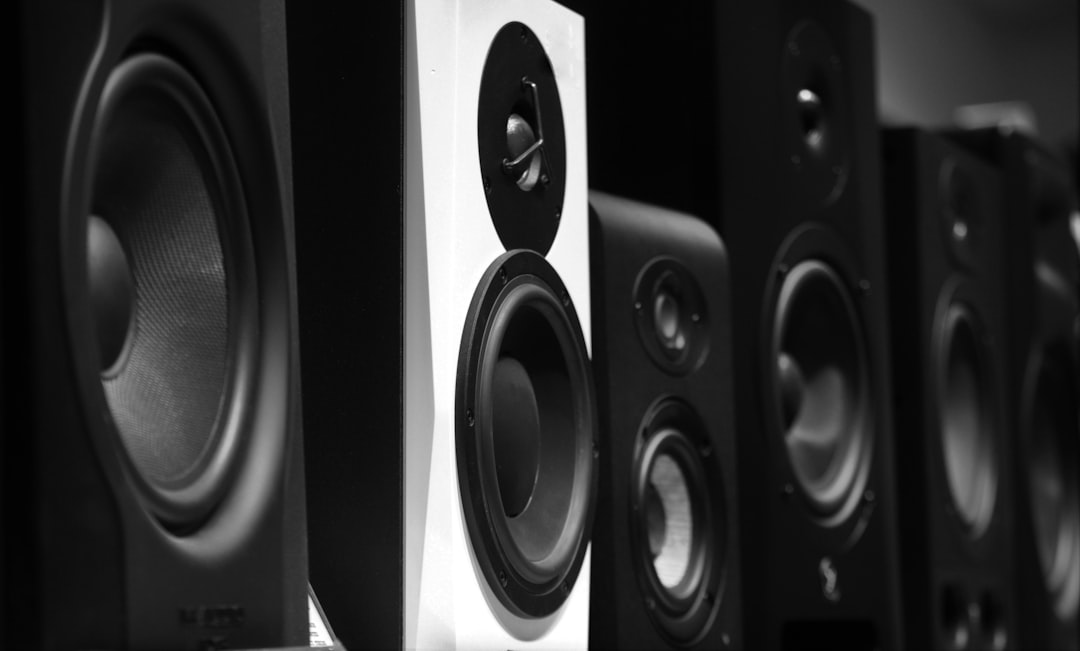
Your studio's sound is shaped not only by the recording equipment but also by the quality of your sound speakers. Investing in a pair of high-fidelity monitors or studio speakers will provide an accurate representation of the audio you're recording. Look for speakers with a flat frequency response and good sound projection, enabling you to mix and monitor with precision. Top-tier audio equipment, such as high-resolution microphones and preamps, can significantly enhance the overall sound quality, making them essential components in your studio setup.
Beyond hardware, software plays a vital role in modern recording studios. Digital Audio Workstations (DAWs) offer a suite of tools for recording, editing, and mixing audio. Popular DAWs like Pro Tools, Ableton Live, or Logic Pro provide intuitive interfaces and advanced features, allowing you to shape your recordings with precision. Integrating these tools with your hardware ensures a seamless workflow, enabling you to focus on the art of creating music or capturing voiceovers. Regularly updating your audio equipment and keeping up with industry standards will ensure your studio remains competitive and delivers exceptional audio experiences.
Mastering Mixing: Techniques for Balanced Sound
Mastering mixing involves balancing all elements of your audio mix to create a cohesive and engaging sound. This is where the art of equalization (EQ), dynamics processing, and panning come into play. One crucial tool in achieving this balance are XLR cables, which ensure clear and reliable signal transmission between your audio equipment, from microphones to mixers to sound speakers.
Equalization is about shaping your mix's frequency response. For example, cutting low frequencies can reduce booming bass that might overwhelm other elements, while boosting high frequencies can add clarity to vocals or instruments. Dynamics processing, using tools like compressors and limiters, controls volume levels, ensuring no single element dominates the mix. A well-set compressor can make your mix sound more polished and professional.
Panning involves assigning stereo images to different tracks, allowing for a wide range of creative possibilities. For instance, panning effects can create a sense of space or depth, with instruments moving from one side of the mix to the other. Balancing these elements requires careful listening and adjustment, but the result is a rich, immersive soundscape. High-quality XLR cables play an essential role in this process by minimizing signal loss and interference, ensuring that your audio equipment—from microphones to speakers—transmits sound accurately and without distortion.
A good practice is to listen to your mix on different systems and environments; this helps you identify issues and make adjustments for versatility. Additionally, standardizing gain levels across all channels simplifies mixing and ensures consistency during monitoring, whether through studio-grade sound speakers or consumer audio equipment. By applying these techniques and utilizing XLR cables effectively, you'll be well on your way to achieving a masterfully balanced mix that captivates listeners.
Essential Monitoring Gear for Accurate Listening
Accurate listening is a cornerstone of successful recording, mixing, and monitoring in both home and project studios. To achieve this, investing in quality monitoring gear is paramount. At the heart of your setup lie sound speakers that deliver precise sound reproduction across the frequency spectrum. Active studio monitors, for instance, offer control over low, midrange, and high frequencies, enabling you to fine-tune your mix to perfection.
XLR cables play a crucial role in connecting these audio equipment components seamlessly. They ensure minimal signal loss and interference, critical for maintaining the integrity of your audio signal. When selecting speakers or monitors, consider their sensitivity ratings—a higher number indicates greater volume for the same input power, facilitating accurate mixing even at lower levels. Moreover, look for frequency response ranges that match the capabilities of your mixing equipment to avoid artificial boosts or cuts in certain bands.
In a home studio, a pair of quality bookshelf speakers paired with an amp and suitable XLR cables can provide a solid monitoring foundation. For larger spaces or more critical listening, consider dedicated nearfield monitors or even main studio monitors. These professional-grade systems offer advanced controls for precise sound shaping. Regular calibration using measurement microphones and software further enhances accuracy by accounting for room acoustics. This meticulous approach ensures that what you hear is an accurate representation of your mix, setting the stage for exceptional results.
XLR Cables: The Cornerstone of Professional Connections
XLR cables are the unsung heroes of any home or project studio, serving as the crucial connection between audio equipment and your creative vision. These versatile cables, with their robust design and reliable performance, are the cornerstone of professional sound systems. Every time you record, mix, or monitor, XLR cables ensure a clear, consistent signal flow from microphones, amplifiers, and speakers, enabling you to capture and reproduce sound with remarkable accuracy.
Choosing the right XLR cable is essential for achieving optimal audio quality. Look for high-quality materials like pure copper conductors and oxygen-free copper (OFC) shielding to minimize signal loss and interference. Longer cables? Opt for those with well-insulated connectors to prevent signal degradation over distance. Top-tier brands often provide specifications like impedance levels, maximum cable length, and even frequency response data, allowing you to make informed decisions tailored to your specific audio equipment and sound speakers.
On the mixing console, XLR cables connect microphones to preamps, ensuring a clean and powerful signal for recording. For monitoring purposes, these cables link your mix to studio-grade speakers, enabling precise listening and mix adjustments. Whether you're recording vocals, instruments, or ambient soundscapes, investing in quality XLR cables will significantly enhance the overall audio experience. Remember, the better the connection, the clearer the sound—a fundamental truth in the world of professional audio.
Frequently Asked Questions About Recording, Mixing and Monitoring Gear Guides for Home and Project Studios.
What equipment do I need to start recording at home? You'll require a computer with adequate processing power and audio capabilities, a high-quality microphone suitable for your voice or instruments, headphones or studio monitors for monitoring, an interface to connect your mic and other devices, and software like a Digital Audio Workstation (DAW) for recording, editing, and mixing. A pop filter and shock mount can also improve audio quality by reducing background noise and vibrations.
How do I choose the best mixer for my project studio? Consider factors like the number of channels needed for your setup, input types (XLR vs. 1/4-inch), built-in effects, and whether it includes a microphone preamplifier. Look for mixers with a good reputation in user reviews and those that offer flexibility for your specific needs, whether it's recording vocals, instruments, or both.
What is the difference between studio monitors and headphones? Studio monitors are designed to reproduce sound accurately, providing a flat response across the frequency spectrum, ideal for mixing and mastering. Headphones, on the other hand, offer personal listening with adjustable volume and isolation from external noise. They're great for tracking, but monitors give you a more precise representation of your mix when working at higher volumes.
Can I use my smartphone as an audio interface? While smartphones have improved in their audio capabilities, they are not ideal for professional-level recording due to limited input/output options and potential latency issues. For better results, invest in a dedicated audio interface designed to connect microphones, instruments, and other gear to your computer.
How can I ensure my recordings sound professional? Focus on good microphone technique, positioning, and room acoustics. Use EQ, compression, and other effects sparingly and only as needed. Listen back critically using high-quality headphones or monitors. Regularly compare your mixes to references from professional releases to gain a sense of what sounds good. Practice makes perfect!
By equipping yourself with the right recording gear, mastering mixing techniques, and essential monitoring tools, you've taken significant steps towards achieving professional-grade audio in your home or project studio. The article's key insights highlight the importance of choosing suitable equipment for your needs, understanding the fundamentals of mixing for balanced sound, and investing in accurate monitoring solutions. Additionally, XLR cables emerge as a cornerstone technology for ensuring reliable, high-quality connections, underpinning the overall audio integrity of your setup. Moving forward, prioritize practical application; experiment with different configurations, refine your mixes, and continually explore ways to enhance your studio's capabilities. This knowledge base serves as an authoritative guide, empowering you to create captivating audio projects.